Introduction
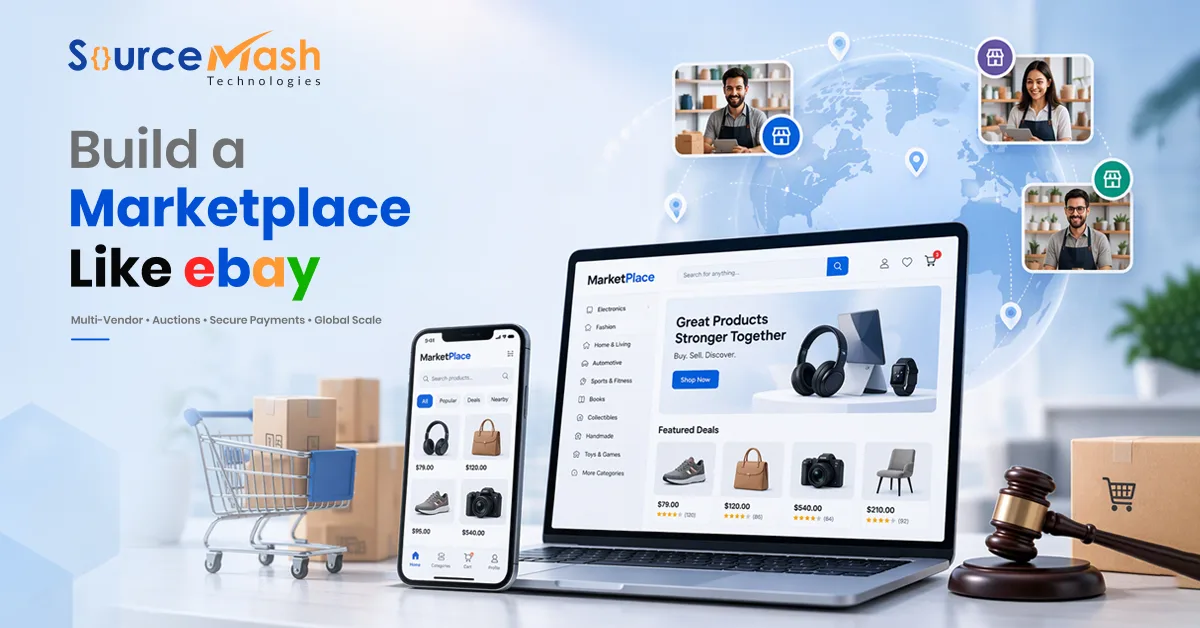
Building a multi-vendor eCommerce marketplace like eBay is one of the most effective ways to establish a scalable online business. Unlike a traditional eCommerce store that relies on a single seller, a multi-vendor marketplace allows multiple vendors to list and sell products through one centralized platform. This approach expands product variety, attracts more buyers, and creates multiple revenue opportunities.
The success of eBay demonstrates how a marketplace can grow into a thriving digital ecosystem by connecting buyers and sellers, facilitating secure transactions, and providing a seamless user experience. However, replicating such success requires careful planning, the right technology stack, robust marketplace functionality, and a clear monetization strategy. Businesses looking to build a scalable marketplace often partner with experienced eCommerce development services providers to ensure successful platform development and long-term growth.
This guide covers everything you need to know about developing a multi-vendor eCommerce site like eBay, including business models, essential features, development processes, costs, security requirements, and growth strategies.
Quick Answers About Developing a Multi-Vendor Marketplace Like eBay
What is a multi-vendor marketplace?
A multi-vendor marketplace is an online platform where multiple sellers can register, manage products, process orders, and sell directly to customers through a shared website or application.
How much does it cost to build a marketplace like eBay?
Development costs typically range from:
- 15,000-40,000 for a basic MVP marketplace
- 40,000-100,000 for a mid-level marketplace
- 100,000-300,000+ for an enterprise-grade marketplace
How long does marketplace development take?
Most projects take between 3 and 12 months, depending on platform complexity, integrations, and customization requirements.
How do marketplace owners make money?
Common revenue streams include:
- Commission on sales
- Subscription plans
- Listing fees
- Featured listings
- Sponsored advertisements
- Transaction fees
Can I add auction functionality like eBay?
Yes. Features such as real-time bidding, reserve prices, auction timers, bid history, and automatic bidding can be integrated into a custom marketplace platform.
Multi-Vendor Marketplace Growth at a Glance
The marketplace model continues to dominate the eCommerce landscape because it offers advantages to both platform owners and sellers.
Why Marketplace Businesses Continue to Grow
- They can scale without owning inventory.
- Vendors continuously add new products.
- Multiple revenue streams improve profitability.
- Buyers gain access to greater product variety.
- Sellers benefit from established marketplace traffic.
These advantages have contributed to the success of marketplaces such as eBay, Amazon Marketplace, Etsy, Alibaba, and Walmart Marketplace.
What Is a Multi-Vendor eCommerce Marketplace?
A multi-vendor marketplace is a platform where multiple independent sellers offer products or services through a shared digital environment.
The marketplace owner manages:
- Platform infrastructure
- User experience
- Vendor onboarding
- Security
- Payments
- Marketplace policies
Meanwhile, individual sellers handle product listings, inventory management, pricing, and order fulfillment.
Popular Examples of Multi-Vendor Marketplaces
Some of the most successful multi-vendor platforms include:
- eBay
- Amazon Marketplace
- Etsy
- Alibaba
- Walmart Marketplace
- Rakuten
Each platform follows the same fundamental principle of connecting buyers and sellers while monetizing marketplace activity.
Why eBay's Marketplace Model Is Successful
Large and Diverse Seller Community
eBay supports both individual sellers and businesses, allowing a broad range of products to be available on the platform.
Auction-Based Buying Experience
Its auction system creates competition among buyers and helps sellers maximize product value.
Trust and Transparency
Ratings, reviews, and seller feedback systems help users make informed purchasing decisions.
Global Accessibility
Users can buy and sell products across different locations and markets.
Inventory-Free Platform Management
eBay generates revenue without managing inventory, warehousing, or product manufacturing.
Business Models for an eBay-Like Marketplace
Business-to-Consumer (B2C)
Businesses sell products directly to consumers.
Common Categories
- Electronics
- Fashion
- Home goods
- Consumer products
Consumer-to-Consumer (C2C)
Individuals sell products directly to other consumers.
Common Categories
- Used products
- Collectibles
- Vintage items
- Personal goods
This model closely resembles eBay's original marketplace approach.
Business-to-Business (B2B)
Businesses sell products and services to other businesses.
Common Categories
- Industrial supplies
- Wholesale products
- Manufacturing materials
Hybrid Marketplace
A hybrid marketplace combines B2B, B2C, and C2C selling models within a single platform.
Types of Products You Can Sell on an eBay-Like Marketplace
Electronics
- Smartphones
- Laptops
- Gaming consoles
- Smart devices
Fashion and Accessories
- Clothing
- Footwear
- Jewelry
- Watches
Home and Furniture
- Furniture
- Home décor
- Kitchen products
Collectibles
- Trading cards
- Rare coins
- Memorabilia
- Antiques
Automotive Products
- Spare parts
- Vehicle accessories
- Performance upgrades
Handmade and Craft Products
- Personalized gifts
- Artwork
- Handmade products
Books and Educational Materials
- Textbooks
- Reference books
- Learning materials
Sports and Fitness Equipment
- Exercise equipment
- Outdoor gear
- Sporting accessories
Benefits of Building a Marketplace Like eBay
Faster Business Growth
Each new seller contributes additional inventory and attracts new customers.
Reduced Operational Costs
Marketplace owners do not need to manage large product inventories.
Multiple Revenue Streams
Revenue comes from several monetization methods rather than product sales alone.
Strong Network Effects
As more vendors join, the marketplace becomes increasingly valuable to customers.
Long-Term Scalability
A properly designed marketplace can support substantial growth without major operational changes.
How an eBay-Like Marketplace Works
Marketplace Administrator
Responsible for:
- Vendor approval
- Product moderation
- Commission management
- User management
- Marketplace monitoring
- Dispute resolution
Vendors
Responsible for:
- Product listings
- Inventory management
- Pricing updates
- Order fulfillment
- Customer support
Customers
Responsible for:
- Product discovery
- Purchasing
- Bidding
- Reviews and ratings
Marketplace Workflow
- Seller registers on the marketplace.
- Administrator verifies and approves the seller.
- Seller publishes product listings.
- Customers browse products.
- Customers purchase or place bids.
- Payments are processed securely.
- Orders are fulfilled.
- Marketplace commissions are collected.
- Customers submit reviews and ratings.
Revenue Models for a Marketplace Like eBay
Commission-Based Revenue
The marketplace earns a percentage from each completed transaction.
Listing Fees
Sellers pay fees to publish product listings.
Subscription Plans
Monthly or annual plans provide premium marketplace features.
Featured Product Listings
Vendors pay to increase product visibility on the platform.
Advertising Revenue
Brands and vendors can promote products through sponsored placements.
Transaction Fees
Additional fees may be charged during the payment process.
Essential Features of a Multi-Vendor Marketplace
Customer Features
✓ User Registration and Login
Support:
- Email registration
- Mobile verification
- Social login
✓ Advanced Product Search
Allow users to filter by:
- Category
- Price
- Brand
- Location
- Rating
✓ Product Comparison
Help customers compare products before making purchasing decisions.
✓ Shopping Cart and Checkout
Provide a secure and efficient purchasing experience.
✓ Real-Time Order Tracking
Enable customers to monitor order status and delivery progress.
✓ Reviews and Ratings
Build transparency and trust within the marketplace.
✓ Wishlist Functionality
Allow users to save products for future purchases.
Vendor Features
✓ Vendor Dashboard
A centralized interface for managing marketplace activities.
✓ Product Management
Allow sellers to:
- Create listings
- Update information
- Upload images
- Manage pricing
✓ Inventory Control
Track inventory levels and stock availability.
✓ Order Management
Process and monitor customer orders efficiently.
✓ Analytics and Reporting
Provide insights into sales and performance metrics.
Administrator Features
✓ Seller Verification
Approve and manage vendor registrations.
✓ Product Moderation
Maintain listing quality and platform standards.
✓ Commission Management
Configure marketplace fee structures.
✓ User Management
Control platform access and user accounts.
✓ Marketplace Analytics
Track growth, revenue, and marketplace performance.
✓ Dispute Resolution
Handle refunds, complaints, and transaction issues.
Auction Features Required in an eBay-Like Marketplace
Real-Time Bidding
Allow users to place bids instantly during active auctions.
Reserve Pricing
Enable sellers to define minimum acceptable bid amounts.
Automatic Bidding
Allow buyers to set maximum bid limits.
Bid History Tracking
Display auction activity for transparency.
Auction Countdowns
Encourage participation with real-time timers.
Winner Notifications
Automatically notify successful bidders.
Auction Performance Reporting
Help sellers evaluate auction success.
Advanced Features for Competitive Marketplaces
AI-Powered Recommendations
Provide personalized product suggestions.
Multi-Language Support
Expand accessibility across international markets.
Multi-Currency Functionality
Support cross-border transactions.
Live Chat
Facilitate communication between buyers and sellers.
Loyalty and Rewards Programs
Increase customer retention and repeat purchases.
Personalized User Experiences
Customize content according to user behavior and preferences.
MVP Features for Marketplace Launch
Launching with a Minimum Viable Product (MVP) helps validate the concept before major investment.
Essential MVP Features
- User registration
- Vendor onboarding
- Product listings
- Search and filtering
- Shopping cart
- Checkout process
- Payment integration
- Reviews and ratings
- Order management
Features for Future Expansion
- Auction functionality
- Mobile applications
- AI recommendations
- Loyalty programs
- Advanced analytics
Technology Stack for Building an eBay-Like Marketplace
Front-End Technologies
- React.js
- Next.js
- Angular
- Vue.js
Back-End Technologies
- ASP.NET Core
- Node.js
- Laravel
- Django
Database Options
- PostgreSQL
- MySQL
- MongoDB
Search Solutions
- Elasticsearch
- Algolia
Cloud Infrastructure
- Microsoft Azure
- AWS
- Google Cloud Platform
Payment Gateways
- Stripe
- PayPal
- Razorpay
- Authorize.Net
Typical Architecture of an eBay-Like Marketplace
Presentation Layer
Handles the marketplace interface for buyers and sellers.
Application Layer
Manages business logic and marketplace workflows.
Data Layer
Stores marketplace data, products, users, and transactions.
Search Layer
Enables fast and accurate product discovery.
Security Layer
Protects customer information and platform operations.
Infrastructure Layer
Provides scalability, availability, and performance.
Essential Third-Party Integrations
Payment Solutions
- Stripe
- PayPal
- Razorpay
Shipping Providers
- FedEx
- DHL
- UPS
Analytics Tools
- Google Analytics 4
- Microsoft Clarity
Communication Services
- Twilio
- SendGrid
Marketing Platforms
- HubSpot
- Mailchimp
Should You Build Mobile Apps Alongside Your Marketplace?
Android Applications
Help reach a broader audience across global markets.
iOS Applications
Improve customer engagement and retention.
Progressive Web Apps (PWAs)
Provide app-like experiences through web browsers.
Benefits of Mobile Marketplace Apps
- Faster browsing
- Improved engagement
- Push notifications
- Better customer retention
- Higher conversion rates
Custom Marketplace Development vs Ready-Made Solutions
| Factor | Custom Development | Ready-Made Solution |
|---|---|---|
| Flexibility | High | Limited |
| Scalability | Excellent | Moderate |
| Ownership | Complete | Limited |
| Custom Features | Unlimited | Restricted |
| Initial Cost | Higher | Lower |
| Long-Term Growth | Strong | Moderate |
Why Businesses Choose Custom Marketplace Development
✓ Complete Platform Ownership
Maintain full control over marketplace functionality and future upgrades.
✓ Brand Differentiation
Create a unique customer experience without platform restrictions.
✓ Enhanced Scalability
Support future growth and expanding business needs.
✓ Improved Security
Implement security controls aligned with specific business requirements.
✓ Greater Integration Flexibility
Connect with external tools and systems as needed.
Step-by-Step Marketplace Development Process
1. Define Business Objectives
Identify target customers, marketplace niche, and monetization strategy.
2. Conduct Market Research
Analyze competitors and market opportunities.
3. Create Wireframes
Plan user journeys and platform structure.
4. Design User Interfaces
Create intuitive experiences for buyers and sellers.
5. Build Core Marketplace Features
Develop essential platform functionality.
6. Integrate Third-Party Services
Connect payment, shipping, and communication systems.
7. Implement Security Controls
Protect marketplace operations and customer information.
8. Test Thoroughly
Perform:
- Functional testing
- Security testing
- Performance testing
- Usability testing
9. Launch the Marketplace
Deploy the platform and monitor performance.
10. Optimize and Scale
Use analytics and user feedback to improve the marketplace.
Marketplace Development Timeline
| Stage | Estimated Duration |
|---|---|
| Research and Planning | 2-4 Weeks |
| UI/UX Design | 3-6 Weeks |
| Core Development | 8-16 Weeks |
| Testing and QA | 2-4 Weeks |
| Deployment | 1-2 Weeks |
Common Mistakes to Avoid When Building a Marketplace Like eBay
Launching Without Adequate Seller Inventory
A marketplace needs enough products to attract customers.
Ignoring Mobile Users
Poor mobile experiences reduce engagement and sales.
Weak Vendor Verification
Unverified sellers can undermine marketplace trust.
Complex Onboarding Processes
Complicated registration discourages vendor participation.
Inadequate Search Functionality
Poor search experiences reduce conversion rates.
Poor Revenue Planning
Monetization strategies should align with marketplace goals.
Neglecting SEO
Organic traffic plays a major role in marketplace growth.
Underestimating Maintenance Requirements
Ongoing support is essential after launch.
How to Attract Sellers to Your Marketplace
Simplify Registration
Reduce barriers for new vendors.
Offer Competitive Pricing
Provide attractive commission structures.
Support Vendor Growth
Offer promotional opportunities and marketplace visibility.
Provide Seller Insights
Use analytics to help vendors improve performance.
Build a Seller Community
Create educational resources and support programs.
SEO Strategies for Growing a Multi-Vendor Marketplace
Optimize Category Pages
Target commercial-intent keywords.
Create SEO-Friendly URLs
Improve usability and indexing.
Implement Structured Data
Help search engines understand marketplace content.
Improve Core Web Vitals
Enhance user experience and search performance.
Encourage Product Reviews
Generate valuable user-generated content.
Strengthen Internal Linking
Improve navigation and content discovery.
Publish Commercial-Intent Content
Support buying decisions and transactional searches.
Security Features Every Marketplace Needs
- SSL certificates
- Two-factor authentication (2FA)
- Data encryption
- Fraud detection systems
- Secure API integrations
- Role-based permissions
- Automated backups
- Continuous security monitoring
Key Marketplace KPIs to Measure Success
✓ Gross Merchandise Value (GMV)
Measures the total value of products sold.
✓ Customer Acquisition Cost (CAC)
Tracks the cost of gaining new customers.
✓ Customer Lifetime Value (CLV)
Measures long-term customer value.
✓ Average Order Value (AOV)
Tracks average transaction sizes.
✓ Active Vendors
Shows marketplace participation levels.
✓ Vendor Retention Rate
Measures seller satisfaction and loyalty.
✓ Conversion Rate
Tracks the percentage of visitors who complete purchases.
✓ Repeat Purchase Rate
Measures customer retention.
Post-Launch Marketplace Maintenance
Regular maintenance ensures long-term marketplace stability.
Typical Maintenance Activities
- Security updates
- Bug fixes
- Performance optimization
- Database maintenance
- Infrastructure monitoring
- API upgrades
- Feature enhancements
How Much Does It Cost to Build a Marketplace Like eBay?
| Marketplace Type | Estimated Cost |
|---|---|
| MVP Marketplace | 15,000-40,000 |
| Mid-Level Marketplace | 40,000-100,000 |
| Enterprise Marketplace | 100,000-300,000+ |
Additional costs may include hosting, integrations, mobile apps, marketing, maintenance, and security services.
How to Choose the Right Marketplace Development Company
Evaluate Relevant Experience
Review previous marketplace projects.
Assess Technical Expertise
Verify experience with scalable technologies.
Review Security Practices
Ensure adherence to modern security standards.
Check Post-Launch Support
Confirm ongoing maintenance and enhancement services.
Examine Case Studies
Evaluate project outcomes and success stories.
Read Client Testimonials
Assess reliability and client satisfaction.
Frequently Asked Questions
How long does it take to develop a marketplace like eBay?
Most projects require between 3 and 12 months depending on complexity.
Is a multi-vendor marketplace profitable?
Yes. Revenue can be generated through commissions, subscriptions, advertising, and transaction fees.
Can I support both auctions and fixed-price listings?
Yes. Modern marketplaces commonly offer both options.
What is the most important feature of a marketplace?
Trust-building features such as seller verification, reviews, ratings, and secure payments.
Should I launch a website or mobile app first?
Many businesses start with a responsive website and add mobile apps after validating demand.
Conclusion
Developing a multi-vendor eCommerce site like eBay requires more than building a website. Success depends on creating a reliable marketplace ecosystem that supports buyers, sellers, and administrators while delivering secure transactions, strong user experiences, and sustainable revenue opportunities.
By selecting the right business model, implementing essential marketplace features, integrating secure payment systems, supporting vendor growth, and investing in long-term optimization, businesses can create a scalable marketplace capable of competing in today's rapidly evolving eCommerce landscape. A strategic approach to development not only improves launch success but also lays the foundation for sustainable growth and long-term profitability.